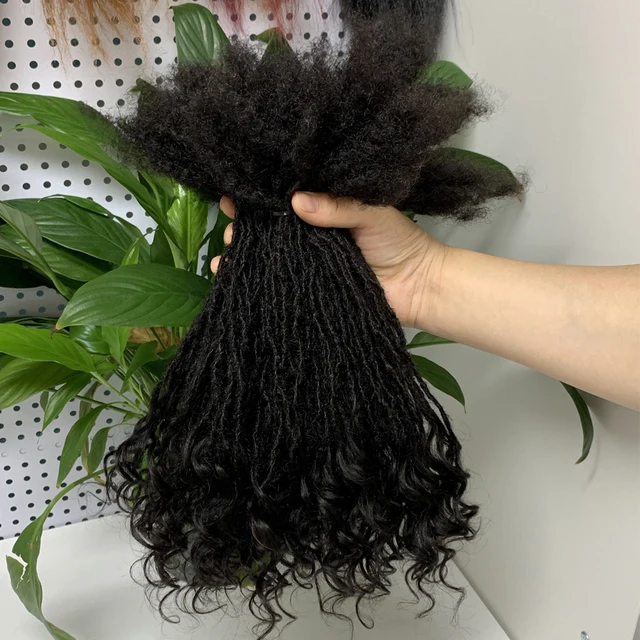
Diameter is the single specification that changes the whole job: strand count, installation hours, retighten interval, and how the finished grid reads at a distance. The number itself is less important than the tolerance around it.
1. The Three Diameters in Practice
Around 0.2cm reads as a fine grid and suits clients who want density and a soft fall; it needs more strands and more installation time. Around 0.4cm is the middle working size most salons quote for a full head. Around 0.6cm reads fuller and installs faster, with fewer strands per head.
2. Strand Count Follows the Diameter
A finer diameter means more strands to cover the same scalp area, so the same head can need materially different quantities at 0.2cm and 0.6cm. Quote strand counts per diameter rather than one number per head, and confirm the count with the client before ordering.
3. Where Tolerance Matters More Than the Number
A batch quoted at 0.4cm with a wide tolerance installs like a mixed batch, and the grid shows it. Ask for the tolerance band and check a sample with a caliper at several points along the strand, not just at the end.
4. Applying This to the Current Line
The figures above only matter against a concrete specification. For this category we are working with KAMA Customized Handmade Interlocked 0.1cm 0.2cm 0.4 cm Afro Kinky Curly Ends Microlocs for Locs and Twists Hair Styles at 0.75~4.55 — record the same measurements for it on receipt and compare them with the batch you last accepted, rather than with the listing photograph.
5. What to Monitor
When a client cannot decide, install a small test section at two diameters and let them feel the difference before the full head is ordered.